Signs You Need Professional Tree Removal
Most people do not wake up one morning and decide a tree needs to go. It is usually a slow realization, a limb that keeps dropping bark, a lean that seems a little worse each year, mushrooms growing at the base that were not there last summer. Learning to spot the real tree removal signs Syracuse NY properties tend to show is one of the most useful things a homeowner can do, because trees rarely fail without warning. The warning is just easy to miss if you do not know what you are looking at.
Cracks, Splits, and Included Bark
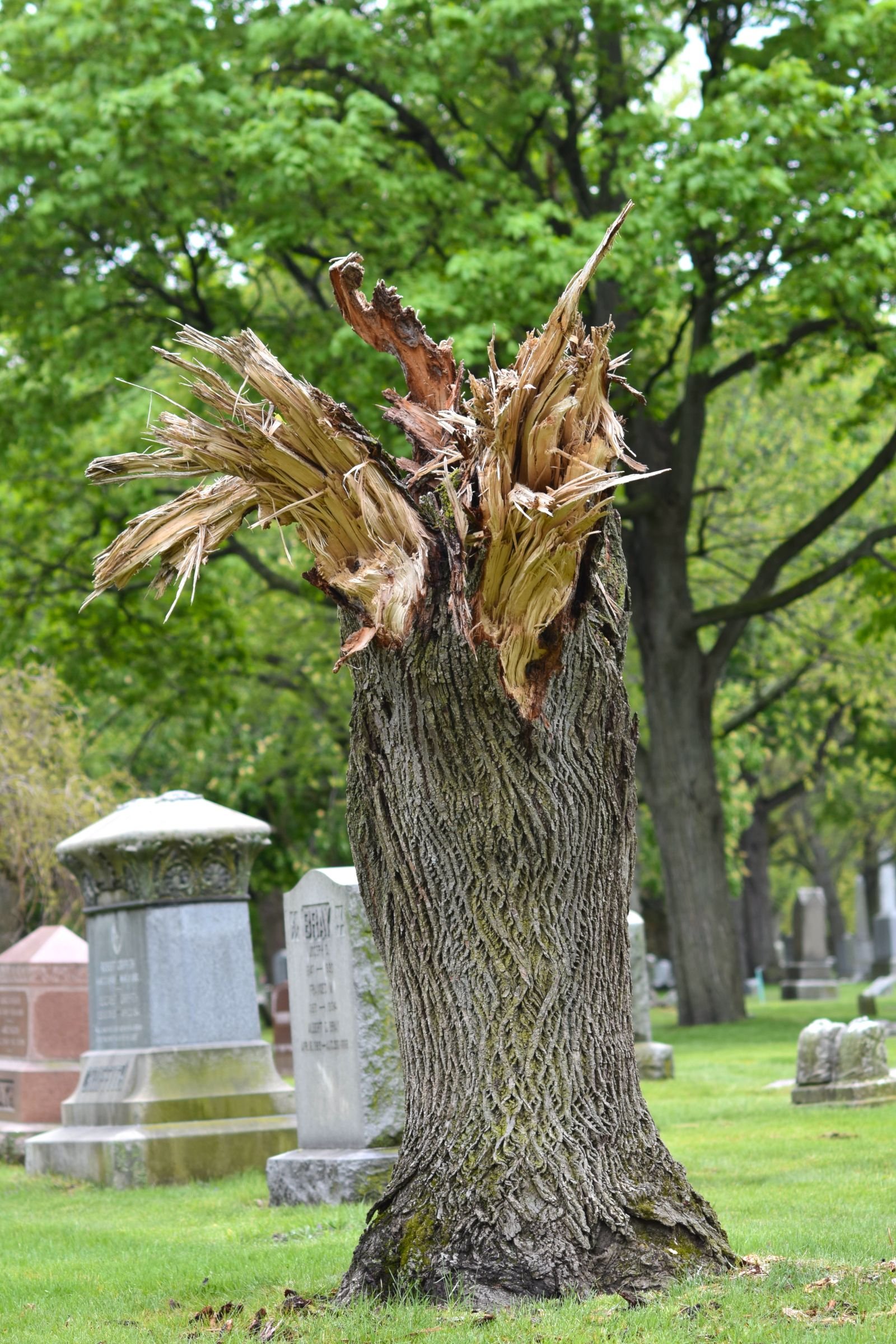
Start at the trunk. Vertical cracks that run any real length, especially ones that seem to open and close with wind, are a sign the wood fibers underneath are separating. Splits at a major branch union, where two large limbs meet in a tight V shape rather than a wide U, are also worth taking seriously. That tight angle traps bark inside the joint instead of allowing the wood to fuse solidly, a condition called included bark, and it is one of the more common reasons large limbs suddenly fail during a wind event or heavy snow load.
None of this means the tree is doomed the moment you spot it. Plenty of trees live for years with minor imperfections. But a crack that is growing, or one paired with other symptoms below, is a good reason to get a professional opinion rather than guess.
Fungus, Mushrooms, and Soft Wood
Mushrooms or shelf like fungus growing on the trunk or at the root flare are one of the clearest signals of internal decay. Fungus feeds on dead or dying wood, so if you see it, there is a good chance the tree has rot happening somewhere you cannot see from the outside. Press on the bark near the base with your thumb. Wood that feels spongy or crumbles instead of holding firm often means the trunk has lost structural strength right where it needs it most. A tree can look completely healthy in the canopy and still be dangerously weak at the base, which is exactly why relying on appearance alone is not enough.
Dead Limbs, Thinning Canopy, and Bark Loss
Look up before you decide a tree is fine. Dead limbs, ones with no leaves in season or bark that has fallen away to expose bare wood, do not heal or come back. They just get more brittle over time and eventually drop, often without much wind at all. A canopy that is thinning overall, with more sky visible through the branches than in past years, can point to root damage, disease, or stress the tree is not recovering from. Bark that is peeling or missing in patches lower on the trunk is worth a closer look too, since that is often where storm damage or insect activity starts.
If several of these symptoms show up together, that is a stronger signal than any one on its own. A single dead branch is common and usually just needs pruning. A thinning crown, peeling bark, and fungus at the base together is a different story.
Damage to Roots and the Ground Around a Tree
Signs of trouble are not always up in the canopy. Look at the ground around the base of the tree too. Soil that has heaved or cracked in a rough circle around the trunk can mean the root system is failing to hold the tree steady. Mushrooms growing in a ring some distance from the trunk, following the line of the tree’s major roots, often point to root rot spreading underground even when the trunk itself still looks solid. Construction activity nearby, trenching for utilities, grading, or heavy equipment driving over the root zone, can compact soil or sever roots in ways that do not show visible symptoms above ground for a year or more. If you have had recent work done near a mature tree and it has not looked quite right since, that timing is not a coincidence.
Another sign worth checking is whether the tree is producing an unusually large amount of seeds, cones, or fruit in a single season. Stressed trees sometimes put out a heavy reproductive push as a last effort before decline, which can be an early signal that something below the surface is not right.
The Lean That Was Not There Before
Every tree has some natural lean, and that alone is not an emergency. What matters is change. A tree that has started leaning more than it used to, especially if you notice the soil lifting or cracking on the opposite side of the lean, may be losing its grip in the root system. This is common after heavy rain saturates the ground or after high winds rock a tree enough to loosen roots without actually toppling it. A newly leaning tree near a house, driveway, or where people regularly walk should get looked at quickly rather than added to a someday list.
Why This Matters More After a Central New York Winter
Our climate is tough on trees in ways that are easy to underestimate. The freeze and thaw pattern we get through a typical winter expands and contracts water trapped in cracks, which widens weak points in bark and wood over time. Heavy wet snow, the kind lake effect systems dump on towns like Liverpool and across the Syracuse area, adds real weight to limbs that may already be compromised. Ice storms make it worse by coating branches in a layer that can double or triple their normal weight. A tree that was borderline in October can be a genuine hazard by February, which is why late summer and fall are a smart time to get an inspection before storm season arrives.
We handle a lot of storm related calls every winter for trees that showed signs the homeowner noticed but did not act on. It is a pattern we would love to help people break.
Location Matters as Much as Condition
Two trees showing the exact same symptoms do not carry the same risk if one sits in the middle of an open field and the other hangs over a bedroom, a driveway where kids wait for the school bus, or a neighbor’s fence line. When we evaluate a tree, we weigh the target as much as the tree itself. A moderately concerning tree near a structure or a high traffic area often gets prioritized ahead of a more damaged tree that would simply fall into open woods with nothing underneath it. If you have a tree with even mild warning signs positioned over something you cannot afford to lose, it is worth moving that inspection up your list rather than waiting to see how it looks next season.
What to Do If You Notice These Signs
If you spot one or more of these red flags, do not try to diagnose it yourself from the ground and definitely do not climb up to look closer. Call a professional for an onsite evaluation. Sometimes the fix is simple, corrective trimming and pruning to remove the problem limb and relieve stress on the rest of the tree. Other times, especially with significant trunk decay or a growing lean near a structure, full tree removal is the safer and more cost effective path once you weigh it against the risk of a fallen tree damaging your home.
Get a Free Inspection
We inspect trees throughout Liverpool, Syracuse, and the surrounding towns every week, and there is no charge to have us take a look and tell you honestly what we see. If something about a tree on your property has been bothering you, trust that instinct and give us a call at (315) 999-5615. We would much rather help you catch a problem early than respond to it after a storm.
Want it handled?
Our crews handle tree care, landscaping, drainage, and snow plowing across the Syracuse area. Get a free, no-obligation estimate.
Get a Free Estimate